Citizens United Seminar Speakers Lead the Way for Corporations and Trade Associations “Today, the days of Alice in Wonderland budgeting in Trenton end.” –Chris Christie, newly elected GOP Governor of New Jersey, Joint Session of Legislature, Feb. 11, 2010 The Highest Risk Option for Business in 2010 is Unilateral Political Disarmament Leveling NC’s Political Playing
[More…]
 Citizens United Seminar Speakers Lead the Way for Corporations and Trade Associations
“Today, the days of Alice in Wonderland budgeting in Trenton end.”
–Chris Christie, newly elected GOP Governor of New Jersey, Joint Session of Legislature, Feb. 11, 2010
The Highest Risk Option for Business in 2010 is Unilateral Political Disarmament
Leveling NC’s Political Playing Field: How to Use New Business Free Speech Rights, was the topic for a seminar hosted on Monday by Longistics. Four experts addressed the legal and practical application of the new rights to corporate-funded independent expenditure ads, recently granted by the U.S. Supreme Court. Speaking to the law were attorneys Robert S. LaBrant, Sr. VP, Political Affairs & General Counsel, Michigan Chamber, and Stephen B. Long, a partner with Williams Mullen, Raleigh. Speaking to the practical application of the law were political consultants Chris Sinclair, Cornerstone Solutions, and Neal Rhoades, Southeast Strategies.
Continue reading »
“I am a life-long Independent, registered Unaffiliated, and consider myself a radical moderate.” -John Davis, John Davis Political Report A Letter to Rob Christensen, Political Reporter, The News & Observer Note: Today’s N&O carried a front page story titled, Perdue: SEANC speaks for state workers. In the story, political reporter Rob Christensen quoted me in writing,
[More…]
“I am a life-long Independent, registered Unaffiliated, and consider myself a radical moderate.” -John Davis, John Davis Political Report
A Letter to Rob Christensen, Political Reporter, The News & Observer
Note: Today’s N&O carried a front page story titled, Perdue: SEANC speaks for state workers. In the story, political reporter Rob Christensen quoted me in writing, “Very clearly this state is moving toward unionization of public employees and collective bargaining rights,” said Davis, a pro-business Republican. What follows is my reply to Rob, a seasoned political writer who I respect very much, correcting his characterization of me as a “pro-business Republican,” followed by a defense of radical moderation, and the need for a balanced, two-party state.
Continue reading »
“[Executive Order 45] means that we can discuss the terms and conditions of our employment.”1 –Dana Cope, Executive Director, SEANC (SEIU Local 2008), Jan. 25, 2010 The State of the Union Money in North Carolina Politics In last Sunday‟s News and Observer, the editorial page carried a misleading op-ed piece written by Gene Nichol, a
[More…]

“[Executive Order 45] means that we can discuss the terms and conditions of our employment.”1
–Dana Cope, Executive Director, SEANC (SEIU Local 2008), Jan. 25, 2010
The State of the Union Money in North Carolina Politics
In last Sunday‟s News and Observer, the editorial page carried a misleading op-ed piece written by Gene Nichol, a law Professor at UNC-Chapel Hill. Professor Nichol was spitting mad about last week‟s US Supreme Court decision that gave unlimited independent political free speech rights to corporations and unions. “I find no words to convey adequate outrage over Friday’s US Supreme Court decision, in the Citizens United case, to radically untether corporate spending in our electoral politics,” fumed Professor Nichol, “It is bizarrely anti-democratic.”2
Why misleading? If Professor Nichol had taken the time to read the decision before regurgitating his sanctimonious ire, he would have discovered that the ruling applies to both corporations and unions. Yet, not once in his editorial, titled Supreme corporations, did Professor Nichol include “unions” as he decried the corrupting influence of money. The Citizens United case can be found on the US Supreme Court‟s web site.3 The phrase “corporations and unions” appears 26 times in the opinion. Everything corporations can now do, so can unions.
While Nichol assails corporate political spending, he fails to mention that unions contributed over $5 million in 2008 to North Carolina politicians; 98% of their money going to Democrats.
Unrestrained Spending by Public Employee Unions
Perhaps the reason Professor Nichol, a public employee, overlooks big union money in North Carolina politics is because almost all of the union money comes from public employee unions. Of the $5,032,908 spent by unions in 2008 on North Carolina candidates, $4,532,540 was spent by public employee unions and their affiliated unions. Here are the facts:4
- SEANC (State Employees Assn. of NC) contributed $243,706 to NC candidates
- Democratic candidates received $218,956 of SEANC money, or 90%
- Republican candidates received $24,750 of SEANC money, or 10%
- SEANC is Local #2008, affiliated with SEIU (Service Employees Int‟l Union)
- SEIU invested $1,810,566 in NC candidates in 2008
- Democrats enjoyed $1,760,556 of SEIU‟s money, or 97%; Republicans 3%
- SEIU gave the North Carolina Democratic Party over $1 million
- NCAE (NC Association of Educators) contributed $265,330 to 200 NC candidates
- Democratic candidates received $245,980 of NCAE money, or 93%
- NEA (National Education Association) invested $2,212,936 in NC candidates
- 100% of NEA‟s $2,212,936 went to help Democrats; Republicans 0%
- NEA ran a $1.7 million independent expenditure campaign for Bev Perdue
Additional union funds invested in 2008 and conveniently overlooked by Professor Nichol:
- United Auto Workers union gave the North Carolina Democratic Party over $100,000
- DRIVE, the Teamsters union, contributed $361,617 to NC Democrats
- IBEW (International Brotherhood of Electrical Workers) gave $36,500 to Democrats
- UFCE (United Food and Commercial Workers) contributed over $100,000 to the Democratic Party of North Carolina
UNC law Professor Gene Nichol writes, “A system of government in which those who seek certain policies are allowed to spend unrestrained sums on behalf of those who make the policies can be called many things. „Democratic‟ and „fair‟ are not among them.” Why is Nichol only including corporate “unrestrained sums?” What‟s “fair” about excluding unions?
If UNC law Professor Gene Nichol would go to the website, www.opensecrets.org, and do a search on the largest political independent expenditure groups, he would discover that SEIU is #1 on the list of the Top 100 all-time biggest spenders.5 In 2008, SEIU spent $85 million to influence the outcome of elections, and was rewarded by President Obama with support for the Employee Free Choice Act legislation and top White House jobs including political director, and positions on the National Labor Relations Board and the president‟s Economic Recovery Advisory Board.6
In 2006, SEIU spent $635,000 in North Carolina elections on TV and radio ads, mailings, opinion polls, and Get-Out-The-Vote phone banks – more than ANY BUSINESS PAC in NC. SEIU also contributed more than 10% of the total budget of FairJudges.net to run ads statewide for NC Supreme Court candidates in 2006. In 2004, SEIU spent $650,000 just on NC legislative races.
Perhaps it was just an oversight. Surely Professor Nichol intended to include unions among those who have rendered our system of government undemocratic and unfair because of their unrestrained spending. And surely he intended to include the UNC-Chapel Hill PAC.
According to Democracy North Carolina, the state’s leading campaign finance watchdog, “A group of UNC-Chapel Hill boosters called Citizens for Higher Education gave $479,000 to legislative candidates during the 2008 election, more money than any other PAC.”7 Oh well, just another one of Nichols‟ inadvertent exclusions from those who have rendered our system of government undemocratic and unfair because of their unrestrained spending.
Governor Bev Perdue‟s Executive Order #45
On May 3, 2008, the State Employees Association of North Carolina (SEANC) voted to officially affiliate with Service Employees International Union (SEIU). SEANC is now known as SEIU Local 2008, and is the South‟s leading state employee association with its 55,000 members.
During the 2008 election cycle, SEANC and SEIU invested $2,054,271 in North Carolina politics. They, along with fellow public employee unions NEA and the NCAE, invested $1,846,219 to help Beverly Perdue win the governor‟s race in 2008.
Last Friday, Governor Perdue signed Executive Order #45, a move characterized by The Insider on Tuesday this way: “Gov. Beverly Perdue has issued an executive order that pushes state employees a little closer to collective bargaining rights.”8 Dana Cope, Executive Director of SEANC, SEIU Local 2008, sees it similarly. “[Executive Order 45] means that we can discuss the terms and conditions of our employment.”9
UNC law Professor Gene Nichol writes, “A system of government in which those who seek certain policies are allowed to spend unrestrained sums on behalf of those who make the policies can be called many things. „Democratic‟ and „fair‟ are not among them.” Like it or not, as of last Friday’s US Supreme Court decision, in the Citizens United case, unrestrained independent expenditures by corporations and unions is the law.
UNC law Professor Gene Nichols‟ diatribe in last Sunday‟s News and Observer described untethered corporate spending in our electoral politics as, “bizarrely anti-democratic.” He said that he could not find words to adequately convey his outrage. Not including unions in his op-ed piece is bizarrely anti-accurate. Perhaps the next time he needs to try to find words that adequately interpret the law.
References
- http://www.seanc.org/news/homepagenews.aspx
- http://www.newsobserver.com/opinion/columnists_blogs/other_views/story/299567.html
- http://www.supremecourtus.gov/opinions/09pdf/08-205.pdf
- Union contributions and independent expenditures database provided by Civitas Institute
- http://www.opensecrets.org/orgs/indexp.php
- The Wall Street Journal, SEIU Campaign Spending Pays Political Dividends, May 16, 2009
- Democracy North Carolina, Press Release: Friday, June 26, 2009; Special-Interest PACs Guard Tax Loopholes
- http://www.governor.state.nc.us/NewsItems/ExecutiveOrderDetail.aspx?newsItemID=884
- http://www.seanc.org/news/homepagenews.aspx
“They’re the men who served with John Kerry in Vietnam. Tortured for refusing to confess what John Kerry accused them of … of being war criminals. With nothing to gain for themselves, they have come forward to talk about the John Kerry they know.”1 Swift Boat Vets and POWs for Truth, TV ad excerpt, September
[More…]

“They’re the men who served with John Kerry in Vietnam. Tortured for refusing to confess what John Kerry accused them of … of being war criminals. With nothing to gain for themselves, they have come forward to talk about the John Kerry they know.”1 Swift Boat Vets and POWs for Truth, TV ad excerpt, September 2004
Below you will find a memo written by Patton Boggs, one of the leading campaign finance law firms in America, summarizing the implications of the new U.S. Supreme Court decision handed down on January 20, 2010, freeing corporations from campaign spending limits on independent expenditure advertising. Here are some of the highlights:
- Before last week’s ruling, corporate funds could not be used to fund independent ads that expressly called for the election or defeat of a political candidate. Now they can.
- Before the ruling, corporate funds could not be used to fund independent issue advocacy ads within 30 days of a primary or 60 days of the general election. Now they can.
Example: The famous Swift Boat Veterans ads never called for the election of George Bush or the defeat of John Kerry. Those ads merely disclosed questions about John Kerry’s war record. Corporations could have helped fund those ads up to 30 days before the primary and 60 days before the general election. However, as those ads were developed after the Democratic National Convention in 2004 and run only in September and October, within the 60 days before the general election, none of the $26 million raised to fund the ads was from corporate funds. Today, corporate money CAN be used to pay for the Swift Boat Veterans type ads all the way up to Election Day, and, you CAN call for the election or defeat of a candidate.
Continue reading »
“Governments at every level had become too cavalier about spending taxpayer money. Too often, bureaucracies were oblivious to the cost of their mandates. A lot of liberal rhetoric did seem to value rights and entitlements over duties and responsibilities.”1 — U.S. Senator Barack Obama, 2006 Hu-bris (hyoo’bris) n. Overbearing pride or presumption; arrogance. In his
[More…]
“Governments at every level had become too cavalier about spending taxpayer money. Too often, bureaucracies were oblivious to the cost of their mandates. A lot of liberal rhetoric did seem to value rights and entitlements over duties and responsibilities.”1 — U.S. Senator Barack Obama, 2006
Hu-bris (hyoo’bris) n. Overbearing pride or presumption; arrogance.
 In his book, The Audacity to Win, President Obama’s campaign manager David Plouffe writes about Obama’s “significant self-confidence.” What Plouffe calls significant self-confidence is also hubris, excessive pride or arrogance; the trait most responsible for Obama’s failed first year.
The year was 2003. Plouffe was meeting with Obama in Chicago for the first time to talk about his 2004 race for U.S. Senate. He was trying to persuade Obama of the importance of allowing campaign professionals to run the campaign. “You just have to let go and trust,” Plouffe told him. “I understand that intellectually,” said Obama, “but this is my life and career. And I think I could probably do every job on the campaign better than the people I’ll hire to do it.”2
Continue reading »
Politics, Rain Dances and Comets Timing has a lot to do with the outcome of political races, just like timing has a lot to do with the outcome of a rain dance … or the return of a comet. President Barack Obama’s 2008 campaign for the White House reminds me of Halley’s Comet: a spectacular
[More…]
 Politics, Rain Dances and Comets
Timing has a lot to do with the outcome of political races, just like timing has a lot to do with the outcome of a rain dance … or the return of a comet.
President Barack Obama’s 2008 campaign for the White House reminds me of Halley’s Comet: a spectacular event, brilliant and inspiring, that comes along once every 76 years. Using his skills honed as an inner city community organizer in Chicago, he won the race with 7 million more popular votes than any candidate in the history of presidential politics, raising a staggering $782 million, and employing 6,000 staffers who managed an all-volunteer army of 13 million.
David Plouffe, President Obama’s campaign manager, revealed the campaign secrets in his book The Audacity to Win, published last month. He proudly tells the story of how their rag tag militia defeated the dream teams of both the Democratic and Republican parties with a once-in-a-lifetime-candidate, a single powerful message, and a web site used to organize and communicate with staff and volunteers … and raise money like it had never been raised before.
In September 2008 alone, the Obama campaign raised $150 million; $100 million of that had been raised online as a result of 10 fund-raising e-mails. “There were times when we were raising $250,000, $300,000, even $500,000 an hour.”1 Why did that matter here in North Carolina? “Every additional dime was being funneled into battleground states,” said Plouffe.
Halley’s Comet: a spectacular event, brilliant and inspiring, returns in 2061. That’s about when we will likely see another candidacy like that of Barack Obama in 2008. As to 2010, read on.
Throwing Long
Obama insisted on three things at the outset of his campaign. One was that he alone would establish the message and that it would not be negotiable; two, that his campaign would win with a grassroots organization targeting unconventional voters; three, that they would have the courage to take risks, a campaign quality that David Plouffe describes as “throwing long.”
The message from day one was change. “Change versus a broken status quo; people versus the special interests; a politics that would lift people and the country up; and a president who would not forget the middle-class.”2 The campaign strategy from day one was to gain the advantage over Hillary Clinton and her high-roller backed campaign of Manifest Destiny with a grassroots ground game funded by small contributors. It worked in Iowa; the first major electoral event of the presidential nominating process. Clinton snubbed Iowa while the Obama staff and volunteers pulled off an upset victory by getting their supporters to leave their homes on a frigid, February day and go to a caucus meeting to cast a vote for Obama.
Throughout the primary, the Obama campaign defied conventional wisdom by targeting those least likely to vote like younger white voters, independents, newly registered African-American voters, and African-American voters who had voted sporadically in the past. They invested heavily in early turnout of these non-habitual voters with radio ads and Internet ads pushing early voting; they sent e-mail and text messages to tens of thousands of North Carolinians urging early voting, called tens of thousands more and sent volunteers door-to-door to urge early voting.
Traces of the Strategic Design
On May 6, 2008, Primary Election Day exit polling here in North Carolina was so conclusive that the moment the polls closed the national networks declared Obama the winner over Clinton. Plouffe recalls the 14-point blowout in his book this way: “As the returns came in, we could see the traces of our strategy’s design: by registering over 100,000 new voters, producing strong turnout among African-Americans and young voters, and winning college-educated whites thanks to our stand against the gas tax, we made ourselves unbeatable in North Carolina.”3
The unconventional strategy of targeting atypical voters in unlikely places like North Carolina continued throughout the fall. Obama knew he could not defeat a Republican presidential nominee in the Old North State with TV ads, no matter how much money he spent. His only hope was a massive ground game, registering and turning out non-traditional voters.
When the dust settled and the numbers were tallied in North Carolina following the November elections, 967,804 new voters had been registered during the year, with nearly 8 in 10 registering either as Democrats or Unaffiliated, pushing our state to over 6 million registered voters for the first time ever. New African-American voters totaled over 304,708. New voters in the 18 to 24 year-old age group totaled 317,584.
The Obama campaign had 47 headquarters in our state, with over 400 paid staff in the twenty-something age group. These junior operatives were responsible for record early voting totaling 2.6 million (only 984,000 voted early in 2004), more voters than on Election Day. Seven out of 10 of the early voters were either Democrats (51%) or Unaffiliated (19%). African Americans comprised 28% of early voters, as compared to only 19% of the 2004 general election early vote.
Obama won North Carolina by defying conventional wisdom, by using a non-negotiable message of change and a grassroots organization. He won because he was willing to throw long.
The Honeymoon is Over; and You are Not Who I Married!
It has been said that marriage is when two become one, and then they spend the rest of their lives arguing about which one. The biggest difference between the magical Obama “marriage” of 2008 and the post-honeymoon relationship of 2010 is that now, after a year’s worth of leadership, his supporters are beginning to doubt his commitment to promises made at the altar.
The clearest example of a weakening Obama base can be seen in the low turnout of young adults in Virginia and New Jersey last year despite numerous pleas from the president during personal visits. Only 8% of the 18 to 24 year old voters turned out in New Jersey (17% in 2008), with only 10% turning out in Virginia (21% in 2008). Republicans won both governors’ races.
Obama won in 2008 in great part because of young and enthusiastic, anti-war idealists who worked tirelessly registering and turning out other young, enthusiastic, anti-war idealists. When those same voters opened their laptops yesterday to read the news, they were probably astounded by an AP story titled, Obama wants record $708 billion for wars next year.4 The article notes that the record amount will be used in Iraq and to expand the unpopular war in Afghanistan, and points out that the request will be a difficult sell to Democratic Party leaders in the Congress. Those young anti-war Obama idealists are less likely to retool for other Democrats in 2010.
The tables are now turned. They are now Obama’s wars; it’s now Obama’s economy. He gets the credit for the good and the bad, and it’s beginning to show in the national polls:
According to the Gallop polling organization January 13, 2010:5
- Obama’s job approval is 50%, down from a first-year high of 69%
- Only 40% of Americans approve of Obama’s handling of the economy (lowest ever)
- Only 37% of Americans approve of Obama’s handling of health care reform (lowest ever)
- Looking only at the all-important Independent voters, only 31% approve of Obama’s handling of the economy and of health care reform
- Conservatives outnumber both moderates and liberals for the first time since 2004
- Fewer than half of Americans call themselves Democrats (a first since 2005)
President Barack Obama’s campaign for the White House was a spectacular event, like Halley’s Comet, brilliant and inspiring, a game-changer in many North Carolina races in 2008. But as to whether it will drive our 2010 elections … ummmmmm, well, Halley’s Comet returns in 2061.
References
- The Audacity to Win, by David Plouffe, Campaign Manager for Obama for America, page 327.
- The Audacity to Win, page 32.
- The Audacity to Win, page 229.
- AP, January 13, 2010, by Anne Gearan and Anne Flaherty
- Gallup, January 13, 2010. See: www.gallup.com
“I can’t control my caucus anymore.” — Marc Basnight, NC Senate President Pro Tempore On November 17, 2009, with the unanimous election of Sen. Martin Nesbitt (D-Buncombe) as Majority Leader of the North Carolina Senate following the suspicious resignation of long-time Majority Leader and Rules Chairman Sen. Tony Rand (D-Cumberland), the historic era of unparalleled
[More…]
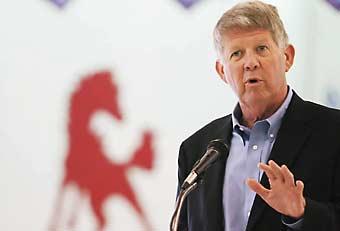
“I can’t control my caucus anymore.” — Marc Basnight, NC Senate President Pro Tempore
On November 17, 2009, with the unanimous election of Sen. Martin Nesbitt (D-Buncombe) as Majority Leader of the North Carolina Senate following the suspicious resignation of long-time Majority Leader and Rules Chairman Sen. Tony Rand (D-Cumberland), the historic era of unparalleled power of Senate President Pro Tempore Marc Basnight came to an end. A new era of Senate and House legislative leadership is beginning, an era led by seasoned urban lawyers with unquestionable liberal credentials.
The latest signal of change came yesterday, when Sen. David Hoyle (D-Gaston), Vice Chair of Finance and the highest rated ally of business, announced that he would retire after this session. The Senate, for decades a safe harbor for North Carolina business, has gone the way of the House and is now in the hands of liberal lawyers. You can count the number of business owners among Senate Democrats on one hand.
Who are these savvy urban liberal political insurgents? They include three very smart lawyers who were elected to the House for the first time nearly three decades ago: Senators Nesbitt and Dan Blue (D-Wake), and House Speaker Joe Hackney (D-Orange), along with fellow attorney and elder statesman Rep. Mickey Michaux (D-Durham), and new rising stars with law degrees like Rep. Jennifer Weiss (D-Wake), Rep. Deborah Ross (D-Wake), and Sen. Dan Clodfelter (D-Mecklenburg). Thus, the new demographic profile of emerging leaders in the North Carolina legislature is liberal urban lawyers.
Legislative leaders are like powerful magnets; the other legislators are like metal filings. Wherever the leaders are along the sliding philosophical scale, from the political left to the political right, all metal filings are drawn in that direction. It’s the nature of magnetic force … the nature of political power.
Marc Basnight, Tony Rand and David Hoyle are three of the most dynamic legislative magnets in state history. They wielded their power over the Senate with ruthless efficiency, consolidating power so effectively that they became the most influential political force in the state. However, the little known fact outside the Raleigh beltline is that they were slowly becoming a minority in their majority caucus.
Basnight and his inner circle were business owners who fit the classic mold that distinguished North Carolina from the rest of the South; they were business progressives. Their fatal flaw was the failure to see the value in maintaining their base of business allies by recruiting and helping elect other business Democrats. And so, imperceptibly over time, a liberal coalition of Democrats grew in number and coalesced to create its own magnetic force, a force now greater than that of the leaders.
When Basnight began his service as President Pro Tempore, over half of the Senate Democratic Caucus members were from business backgrounds. They included bankers, road builders, tobacco warehousemen, farmers, insurance agents, developers, retail merchants, pork producers, truckers and manufacturers. Today, there are only six members of the Senate Democratic Caucus from business backgrounds. Three of those six have retired or plan to retire: David Weinstein (D-Robeson) resigned earlier this year, Tony Rand resigned in November, and David Hoyle who is leaving after this term.
A business scorecard released last month by the North Carolina FreeEnterprise Foundation (NCFEF), a business-sponsored political research offshoot of the now defunct NCFREE, clearly shows that Basnight, Rand and Hoyle are outnumbered.1 Only 10% of the Senate Democrats are ranked in the highest business “Base” friends category, with 60% in the lowest “Occasional Friends” category. Among Republican Senators, 90% are in the business “Base” friends category.
Overall, because of the dramatic decline in business people in the Senate Democratic Caucus, only 42% of all Senators are business friends, with 36% in the lowest “Occasional Friends” category, for a net business advantage of only 6 points. The greatest business advantage was in 1995, when the Democrats had a slim majority of 26 to 24. A whopping 68% of the Senators were business “Base” friends, with only 18% in the lowest, “Occasional Friends” category, for a net business advantage of 50 points.
As to what we can expect from the new urban lawyer leaders: Martin Nesbitt’s lifetime business rating was 51% during his two decades in the House,2 and only 39% on the 2009 Senate Business Ratings conducted last month by NCFEF. Dan Blue’s lifetime business rating was 50% over his two decades in the House and 47% on the recent Senate Business Ratings. Newcomer to the ranks of Senate leadership is Finance Committee co-chair Sen. Dan Clodfelter (D-Mecklenburg), with a score of 62% on the latest business test, considerably higher than fellow lawyers Nesbitt or Blue, but only 30th overall in the Senate.
However, compare those business scores with other Senate leaders from business occupations: Hoyle’s business score is 91%, the highest in the Senate including all Republican scores. Appropriations Committee co-chair A.B. Swindell (D-Nash) has a 75% score, the second highest among the Democrats; Appropriations Committee co-chair Linda Garrou (D-Forsyth), has a 67%, the 7th highest Democrat; and Finance Committee co-chair Clark Jenkins (D-Edgecombe) has a 74% score, the 3rd highest Democrat.
Bottom Line: The Senate is no longer a safe harbor for business. Business, like Basnight, is simply outnumbered. Business has also met its match in building relationships with legislators with campaign contributions. Labor unions dumped over $5 million into North Carolina campaigns in 2008. Now you know why Basnight is beginning to tell his friends, “I can’t control my caucus anymore.”
On the House side, urban lawyer Speaker Joe Hackney’s lifetime business rating is only 34% during his nearly three decades in the House,3 and 42% on the North Carolina FreeEnterprise Foundation 2009 Senate Business Ratings.4 By way of comparison, businessman House Speaker Jim Black (D-Mecklenburg) had a lifetime business rating of 76% during his two decades in the House.5 His predecessor in the Speaker’s chair, businessman Harold Brubaker (R-Randolph), has a lifetime business rating of 90%, and 85% on the new NCFEF 2009 Senate Business Ratings. Brubaker’s lifetime commitment to the state’s business community is uniquely significant as he is in his 17th term.
Although Black is no longer serving (in the legislature), the group of liberal urban lawyers from the House class of 1981 including Senators Nesbitt and Blue, and Representatives Hackney and Michaux, are well positioned to seize the strings to the state purse. Just how tight is this group? Well, when Dan Blue served as Speaker in 1991, Nesbitt was Appropriations Committee chair, Hackney was Finance Committee chair, and Michaux along with Hackney served on the Rules Committee. In 1993, following Blue’s election to a second term as speaker, Nesbitt, Hackney and Michaux continued in those same powerful leadership roles. Their roots are deep; their bonds are tight.
Other rising stars in the House leadership include Paul Luebke (D-Durham), who began serving on the Finance Committee in 1999 and is now the Senior Chair under Speaker Hackney, along with co-chairs Pryor Gibson (D-Anson), William Wainwright (D-Craven) and Jennifer Weiss (D-Wake). Luebke has a 22% rating on the North Carolina FreeEnterprise Foundation 2009 House Business Ratings, ranking him 119th out of 120 House members. Wainwright has a business rating of 52%, with Weiss rated 23%, ranking her 118th out of 120 House members. Gibson, a businessman, is the only solid business ally leading the Finance Committee with a rating of 72%, the ninth highest rated Democrat.
The House Appropriations Committee, led by Michaux as the Senior Chair, has only one solid business ally among the co-chair in businessman Jim Crawford (D-Granville), the #1 highest ranked Democrat in the House with a business rating of 83%, ranking him 10th overall out of 120 House members. Only 13% of the House Democrats are ranked in the highest business “Base” friends category, with 63% in the lowest “Occasional Friends” category. Among Republican Representatives, 96% are in the business “Base” friends category.
Today, overall, only 49% of the 120 members of the House of Representatives are business friends, with 36% in the lowest “Occasional Friends” category, for a net business advantage of only 13 points. In 1995, when the Republicans had the majority, 64% of the Representatives were business “Base” friends, with only 25% in the lowest, “Occasional Friends” category, for a net business advantage of 39 points.
In the conclusion to the book, “The New Politics of North Carolina,” editors Christopher Cooper and Gibbs Knotts make the case that it’s time we reevaluated the notion that North Carolina is a progressive state using six additional dimensions including party competition.6 Cooper and Knotts argue that competition among political parties can, “… foster new ideas, enhance debate, and lead to innovative policy solutions. By and large, a progressive state is a two-party state.”
So, for all of you enlightened business progressives out there concerned about fiscal irresponsibility and the rampant corruption resulting from the unilateral policy making authority of the Democrats, perhaps it’s time that you consider doing something really progressive: vote Republican.
References
- http://ncfef.org/Home_files/2009%20NCFEF%20Business%20Ratings%20Final.pdf
- Almanac of North Carolina Politics, General Election 2002 Supplemental Volume 1, #3, Pg 114.
- Almanac of North Carolina Politics, Fall 2007 Edition, Pg. 294.
- http://ncfef.org/Home_files/2009%20NCFEF%20Business%20Ratings%20Final.pdf
- Almanac of North Carolina Politics, Fall 2005 Edition, Pg. 750.
- The New Politics of North Carolina, North Carolina Press, 2008, Editors: Cooper and Knotts.
“On Thursdays he flew from Jackson to New York City in his private jet to take care of business interests like Amerada Hess Oil and the New York Jets. He always made it back in time to feed the cows.”1 Congratulations to Tom Fetzer, former three-term mayor of Raleigh and newly-elected Chairman of the North
[More…]
“On Thursdays he flew from Jackson to New York City in his private jet to take care of business interests like Amerada Hess Oil and the New York Jets. He always made it back in time to feed the cows.”1

Congratulations to Tom Fetzer, former three-term mayor of Raleigh and newly-elected Chairman of the North Carolina Republican Party, on the occasion of his marriage Saturday, October 17, 2009, to his sweetheart, Kate Spina, from Gadsden, Alabama. I was not invited. That’s important for you to know, because it points out that Tom and I are not close friends; ergo, there is no favoritism in this report. However, I do have a wedding gift for Tom: a transformative political lesson from a reclusive millionaire banker in Mississippi. Here is my gift:
Continue reading »
“Catalist’s member groups contacted 49 million adults more than 127 million times. A total of 28 million of those contacted voted, representing more than 20% of all votes cast. An astounding 82% of their work occurred in 16 swing states, accounting for 37% of all votes cast in these states, including North Carolina.” — The
[More…]

“Catalist’s member groups contacted 49 million adults more than 127 million times. A total of 28 million of those contacted voted, representing more than 20% of all votes cast. An astounding 82% of their work occurred in 16 swing states, accounting for 37% of all votes cast in these states, including North Carolina.” — The Atlantic, Oct. 5-7, 2009, “How Democrats Won the Data War in 2008,” by Marc Ambinder1
Trying to find out how Democrats and allied groups succeeded in registering and turning out voters in record numbers in 2008 is like the plot in the Da Vinci Code; mysterious societies and trails of clues …documents written in backwards script hidden in rosewood boxes.
This week The Atlantic magazine, in a three-part series beginning with, “How Democrats Won the Data War in 2008,” disclosed that it had obtained a secret document, an official “Proprietary and Confidential – Not for Distribution” after-action summary report2 revealing that a heretofore unknown consortium of liberal groups were networked by a common database of likely voters.
The after-action summary report was written by Catalist, the company that provided data and microtargeting services in 2008 for Democrats and allied groups totaling over 90 campaigns, committees and organizations, like SEIU (Service Employees International Union), who spent in excess of $80 million in 2008 working to influence the outcome of elections.
The unprecedented get-out-the-vote operation boasts the following collaborative results:
- More than 1 million volunteers were mobilized by Catalist groups on election day
- Registered voters contacted by Catalist groups turned out at a rate of 74.6% as compared to the national average of about 60.4%
- In North Carolina, the number of votes cast by new voters registered by Catalist groups exceeded Obama’s margin of victory. For emphasis: Even if only 60% of new voters registered by Catalist groups voted for Obama, it would still be greater than Obama’s margin of victory in North Carolina
- Catalist’s groups contacted 49 million adults more than 127 million times
- 28 million of those contacted adults voted, representing more than 20% of all votes cast
- 82% of this work occurred in 16 hotly contested battleground states, accounting for 37% of all votes cast in those states, including North Carolina
Even though the folks at Catalist are careful to note that a correlation between their microtargeting and actual voting does not necessarily mean causation, most political observers would agree that microtargeting improves messaging and the ability to carefully invest only in those voters most likely to support your candidate.
Although microtargeting has been around for several election cycles, and get-out-the-vote programs have been around at least since Abraham Lincoln, it’s the sheer magnitude of the increased effort and results that are so astounding.
In the 2004 presidential campaign, the Kerry campaign and ACT (America Coming Together) mounted what they described as “the largest voter contact program in history.” Working with 33 progressive organizations under the American Votes umbrella, they contacted 8.5 million individuals in an effort to identify those most likely to vote for the Democratic ticket.
Charlie Cook, political analyst and head of the Cook Political Report, was so impressed with the liberal turnout machine in 2004 that he wrote, “[D]emocrats, chiefly through America Coming Together, mounted what was not only the most sophisticated get-out-the-vote operation in the party’s history, but it was probably the best field work by a factor of at least 10.”3
In contrast, the 90 organizations, campaigns and committees working with Catalist in 2008 contacted 15,452,954 people … an increase of 80% over Kerry/ACT in 2004. Obama did better where more “progressive groups” registered and conducted get-out-the-vote operations. No one can argue with the Catalist report’s finding that registered voters with a history of voting who were contacted by progressive organizations turned out at a rate of 74.6%, while those who received no contact from coalition organizations turned out at a rate of 60.4%.
Republicans have a comparable state-of-the-art microtargeting database called “Voter Vault,” but, according to The Atlantic, “… have yet to set up a data consortium like Catalist.” GOP strategists are aware of the need for a “Catalist Right,” the story says.
Political Take Away for 2010: Sans Catalist, Perdue Would Not Be Governor
So now we know how Democrats and allied groups succeeded in registering and turning out voters in record numbers in 2008. We know that it was not about mysterious documents written in backwards script hidden in rosewood boxes or clues written in ultra violet light on papyrus. Democrats beat Republicans at their own game, the game of high-tech targeting of resources.
Catalist gave over 90 progressive organizations a highly-reliable, low-cost national data source that allowed those groups to break all records in their voter registration and turnout operations. All messaging was data-driven; all registration drives were data-driven; all get-out-the-vote initiatives were data-driven. These groups wasted no time or money on voters who were predetermined to have a low likelihood of supporting their candidates and turning out to vote.
Here in North Carolina we saw astounding voter registration and turnout operations being conducted by Democrats … particularly the Obama campaign. We knew that money made a big difference and that Obama had an unlimited supply. We knew that paid staff made a big difference and that Obama had over 400 paid workers operating out of 47 local headquarters. What we didn’t know until this week was that all of that work was based on a sophisticated database from a single source, Catalist, that predetermined every door to door visit, every phone call, every e-mail, every direct mailing, every robo call, every TV ad placement and every personal appearance by Barack Obama.
The results speak for themselves:
- 967,804 new voters registered in North Carolina during 2008
- 49% of new voters in North Carolina in 2008 registered as a Democrat, 29% registered Unaffiliated, and only 22% registered Republican
- 2.4 million North Carolinians voted before Election Day 2008, as compared to only 984,000 who voted early in the fall of 2004
- 51% of early voters were Democrats, 19% were Unaffiliated, and 30% were Republican
- 28% of early voters were African-Americans, compared to 19% in 2004
- More than 1 million African-Americans voted in North Carolina in 2008, a record 74% turnout, surpassing white voter turnout (69%) for the first time in North Carolina history
- Same-day registrations added 122,000 new voters to the rolls, most of them Democrats
- For the first time in 48 years, Tar Heel voters gave Democrats a sweep of the top three offices, President, Governor and United States Senator.
The closing point in Atlantic’s report is that a get-out-the-vote program alone is not enough to drive turnout, but that a “competitive election that matters” is essential. The presidential and gubernatorial elections in our state last year were among the most transformative and competitive in modern history, the closest state races in the country for president and governor. Democrats enjoyed good success in 2008 in part because of a charismatic presidential candidate, an unpopular Republican president and a weak GOP presidential nominee. However, without a data-driven and well-staffed voter registration and turnout organization, Obama would not have carried North Carolina and Beverly Purdue would not be Governor.
References
- The Atlantic, Oct. 5-7, 2009, “How Democrats Won the Data War in 2008,” by Marc Ambinder
- “Aggregate Activities of Progressive Organizations in 2008,” Data from Catalist Subscribers, Summer 2009
- The Almanac of American Politics, January 11, 2005, Charlie Cook analysis of 2004 Presidential Election